(September 9, 2025) Prof. Giorgio De Nunzio and Dr. Luana Conte show that radiomics and AI, combined with standardized imaging and federated architectures, can refine preoperative breast cancer diagnosis, supporting precision oncology and multicenter collaborations.
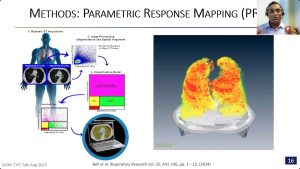
(August 15, 2025) Sundaresh Ram (Emory University) explores how signal processing and machine learning-based tools—such as sparse representations, topological analysis, and graph-based modeling—can be leveraged to transform radiological data into actionable clinical insights.

(July 18, 2025) Alejandro Frangi from University of Manchester provides a comprehensive overview of the Center’s vision, objectives, and strategic role in advancing computational modeling and simulation.

(June 20, 2025) Nick Bottenus from the University of Colorado, Boulder, will discuss his research focused on developing system-level solutions to problems in diagnostic ultrasound imaging.
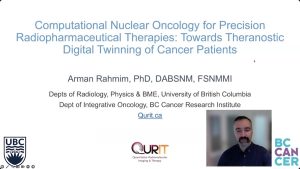
(May 16, 2025) Dr. Arman Rahmim from the University of British Columbia outlines the vision of and efforts towards realization of theranostic digital twins to enable predictive dosimetry and personalization of therapies, delivering maximum radiation doses to tumors while sparing organs-at-risk.